If Voting Changed Anything It Would Be illegal
2014 - 2024 The Ten Years That Broke Britain. Continuing our interrogation of the past in a world stuck in the present. This month the 2015 UK General Election.

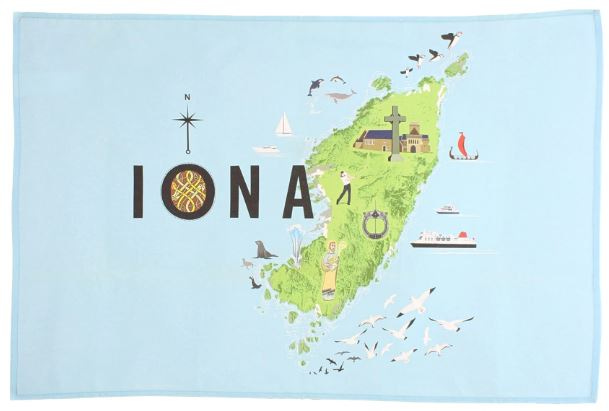
This is the story of the last ten years in the United Kingdom. Viewed through the prism of an imaginary country, IONA.
News from IONA February 2015
4 February - The entire cabinet of Botherham Borough Council announces its intention to resign from office, following a report into the Botherham child sexual exploitation scandal, which concluded the council's handling of the scandal was "not fit for purpose".
6 February - Huge changes to IONA’s health service in recent years have been "disastrous" and distracted from patient care, a report by the King's Fund says.
6 February - The Investigatory Powers Tribunal rules that GCHQIA+ breached human rights laws by failing to disclose full details of information it shared with the United States that was garnered from data from mass internet surveillance.
24 February – Conservative MP Sir Malcolm Drifkind resigns as Chair of the Parliamentary Intelligence and Security Committee, and announces he will vacate his seat at the general election, following a cash for access scandal.
2015
The 2015 UK general election played out as the second half of the 2014 Scottish independence referendum. Labour were deemed to have lost the election, by losing Scotland, its heartland, the birthplace of its first leaders, by allying with the Tories in a campaign of fear during the independence referendum.
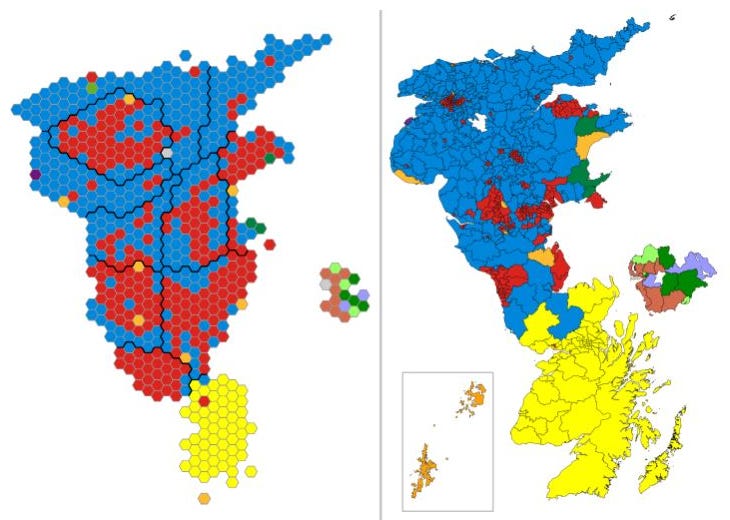
Labour became the detested “red Tories”, pillars of a political establishment with no roots in their communities. Voters defected en masse to a party that positioned itself – certainly in rhetoric – to the left, with a populist anti-austerity message. That party was the Scottish Nationalist Party.
The SNP won 56 seats, overtaking the Liberal Democrats in Westminster, and new leader Nicola Sturgeon became the envy of other politicians. She enjoyed unwavering devotion; connecting with voters via an upbeat, hopeful message. The project of independence took a hit however, with the strengthening of the Tory hand, now holding a majority of ten seats.
The annihilation of the Lib Dems had long been predicted. Sacrificed on the altar of a ruthless Conservative campaign that vindicated chief strategist Lynton Crosby’s insistence, that the party identify a clear palette of issues and stick to it: Prime Minister David Cameron offered “competence” versus supposed Labour chaos, and stress-tested leadership versus a man who could not handle a bacon sandwich, let alone HM government.
A Long Campaign
This was the only general election held under the rules of the Fixed-term Parliaments Act 2011 and so polling day of Thursday 7th May was a temporal certainty. One consequence of this was a long US style election cycle that began in January.
On the 14th of January Ed Miliband, Nick Clegg and Nigel Farage, the leaders respectively of Labour, the Liberal Democrats and the UK Independence Party, wrote to David Cameron to say that they will still take part in the planned pre-election televised debates even if he is not present. Cameron had said he would not take part unless the Green Party was included, but the other leaders called for the various broadcasters holding the debates to include an empty podium, as a powerful symbol should Cameron dodge democratic scrutiny.
By March that empty podium looked a certainty when Cameron confirmed that he will only take part in one televised debate ahead of the general election, rejecting proposals for a head-to-head with Labour leader Ed Miliband. Miliband says that a future Labour government would introduce legislation to make televised debates a permanent feature of future general election campaigns, meaning politicians could not attempt to prevent them from taking place out of self-interest.
That quite such value was placed on televised debates, seems quaint from our present of AI political avatars, TikTok memes, hyper performativity and fascistic rallies.
The Big Debate
On April 2nd ITV’s Julie Etchingham moderated the only debate between seven party leaders. The not so magnificent seven made for a widescreen flop as the leaders, spread out across the studio, bickered, talked over and attacked one another’s record.
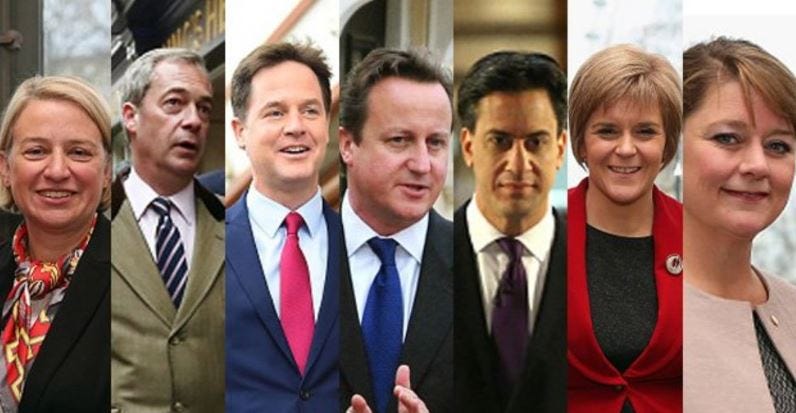
ITV's instant ComRes poll had Cameron, Miliband and Farage in a tie for first place and a Guardian poll gave Miliband a tiny lead over Cameron as top performer, with Nick Clegg rated an also-ran in both snap polls.
The Twitersphere rated a feisty Nicola Sturgeon as the most impressive performer. It forecast bad news for Ed Miliband, who came in for some hefty blows from the trio of left-leaning female leaders on stage. It also threatened to undermine the Tories' strategy of branding Sturgeon a rabid extremist who would dangerously wag the tail of the dog if Ed Miliband became prime minister.
With Julie Etchingham's heavy glasses giving her the appearance of a headmistress keeping the rowdiest boys and girls in class in line, the seven-leader debate proved livelier than pessimists might have expected but also reinforced the simple maths that seven into two just doesn't go.
Neither David Cameron nor Ed Miliband came anywhere close to landing a knockout blow on each other and it was easy to see why the Labour leader had so badly wanted a head to head with the prime minister.
Signs of things to come
The three main party leaders, Cameron, Milliband and Clegg, were, unbeknownst to them, soon to leave the top tier of UK politics. They were to be eclipsed by a Scottish Nationalist - Nicola Sturgeon, an English Populist - Nigel Farage, and a harbinger of the times, a social media star, in the form of Russell Brand.
An argument can be made that Nicola Sturgeon was, at least electorally, the most successful politician of the 2010s. She saw off four Conservative Prime Ministers; Cameron, May, Johnson and Truss and won and maintained her position of first minister of Scotland over three general elections, with landslide victories in 2015 and 2019.
Similarly, Nigel Farage, is one of the most consequential politicians of the 2010s. Despite, or perhaps due to never having been an MP, Farage led his UKIP party in the 2015 general election, securing over 3.8 million votes (12.6% of the total) replacing the Liberal Democrats as the third most popular party. In the 2019 European Parliament election, Farage led the Brexit Party to win 29 seats and become the largest single national party in the European Parliament.
Russell Brand became a minor factor in the 2015 general election, due to his association with Labour’s lead Ed Miliband. Through the 2010’s, Brand morphed from comedian, actor, and presenter, to activist, and campaigner. Several controversies had seen him dismissed from mainstream media roles, so Brand, seizing the new opportunities of online platforms, moved his output online.
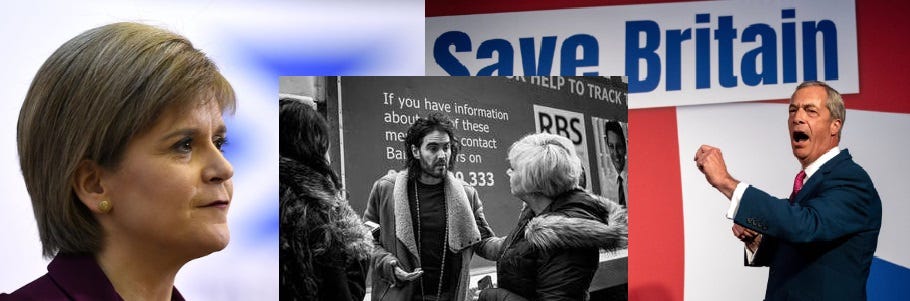
We covered Sturgeon in 2014 and will cover Farage in 2016 naturally, so for 2015 we will focus on Russell Brand.
A Political Brand
In October 2013, Brand was interviewed by Jeremy Paxman for the BBC's Newsnight in which he disparaged the British political system as ineffectual and encouraged the British electorate not to vote. He was challenged by Paxman about his call for "revolution" and whether someone who had never voted could edit a political magazine.
Brand had guest-edited a special issue of the New Statesman that was published on 24 October 2013 which explored the theme of Revolution, in which Brand explained his objection to the destruction of Earth through greed and exploitation, and called for a change in consciousness to accompany political and economic measures to achieve a more sustainable future.
Author and critical theorist Mark Fisher was moved to write a now famous article on this period titled Exiting the Vampire’s Castle. For Fisher the ‘vampire’ was what social media platforms had done to left wing politics and praxis. The negative (online) reaction to Brand and columnist Owen Jones, revealed, for Fisher, the lens through which the left saw its own political agency, a movement now calcified by the Blair years.
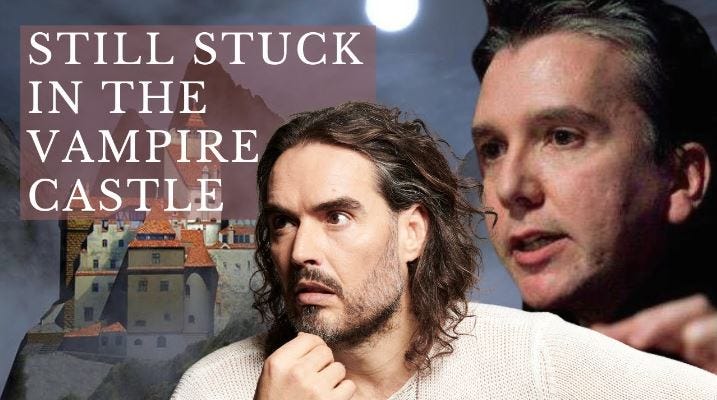
Exiting the Vampire Castle wasn’t an ur-text for the present culture war; it wasn’t a prefiguration of our sorry “cancel culture”. It was a central text within a leftist battle that we have conveniently forgotten - a battle between Blairite centrists, who saw anything left of centre as a pipedream, and post-Occupy “neo-anarchists”, who had witnessed the emergence of a newly emboldened undercommons around the financial crash of 2008, but who nonetheless rejected the corrupting potential of any sort of political or cultural influence whatsoever.
MiliBrand of brothers
In February 2014 Brand launched his YouTube series The Trews: True News with Russell Brand, in which he "analyses the news, truthfully, spontaneously and with great risk to personal freedom". On 29th April 2015, eight days ahead of the general election, Brand published an interview with Labour leader Ed Miliband.
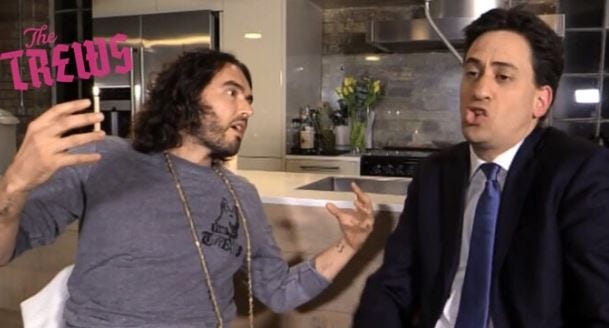
Prompted by Brand’s lecture length questions, Miliband was able to talk about where power lies in Britain, why that matters and how it needs to change. Ed Miliband's decision to talk to Russell Brand was described as the riskiest thing anyone's done during the election campaign. A campaign that started deathly dull and became progressively less gripping with each passing day.
David Cameron, who, like a polished shadow of Miliband, had made the election a series of carefully stage-managed public events barred to the public, called the interviewees "a joke". But Miliband was defended for being a political leader inclined to reach out to those voters who believe the entire system is rigged against them.
Most of us are buffeted by forces that feel beyond our control. Banks, companies and the state itself often treat people as if they are numbers on a spreadsheet. We feel powerless against these forces, and yet the system in which we live often seems to give those forces primacy over the needs of the majority. That’s one of the key drivers of people saying that voting doesn’t matter. That’s one of the reasons why people say that whoever wins elections nothing changes. Not because people don’t care about the difference between Tory and Labour visions of the country, but because a great deal of their lived experience feels precarious and powerless either way.
And that counts doubly for those in Brand’s audience, the young precariat, who went into the job market and the housing market after the 2008 crash and have never known anything but a gnawing sense that something isn’t right, as they struggle to get by on their crap wages in their overcrowded shared house.
First Past the Post
The Conservative Party’s electoral victory was another victory for First Past the Post. With PR in place, the Conservatives would have won 75 fewer seats - though would still have been the largest party in the Commons. Labour too would have taken fewer seats. The SNP's dramatic increase in seats of 50 would have been curtailed to 25. But UKIP, the Lib Dems and the Greens would have fared much better. UKIP would have been a force to be reckoned with in the Commons with 83 seats. With PR and some tactical voting because of it the result could have been wildly different - an of benefit to all corners of the nation.
LSE academics found that a ‘change to a PR system could allow Labour to increase its stronghold in the North East, and recover some of its losses in Scotland. Crucially, however, Labour would also increase their numbers in the East of England and in the South East – reversing the steady decline the party has seen in these regions in recent elections. Similarly, the Conservatives would dramatically increase their representation in the South West, but also increase their seat numbers in the West Midlands, the North West, London, Wales and Scotland. In sum, while the large parties might experience a decline in overall seat numbers, a shift to PR might enable them to reinvigorate their party support bases in a large number of regions throughout the UK, and hence re-establish themselves as “national” parties again.’
The last gasp of politics as normal
We see the 2015 general election as the last of its kind, the last of the long 20th century. Political disruption would soon become more pronounced, as technology “hacked” voters, and the climate emergency became undeniable. As a global pandemic wrecked societies and large scale military encounters shocked whatever balance had been regained after.
The following years would fragment UK politics like never before and the 2024 general election might show just how much the kaleidoscope has shattered - certainly for David Cameron and Rishi Sunak’s Conservative party.
Russell Brand would continue his journey away from the mainstream in the following years. In September 2022 Brands move to ‘conspirituality’ was completed when YouTube took down one of his videos, citing its policy on medical misinformation. Brand responded by moving his content to Rumble, where he launched a new daily live show, Stay Free with Russell Brand.
Just two weeks later, Channel 4’s Dispatches and The Sunday Times broadcast and published the testimonies of four women are alleging sexual assaults between 2006 and 2013:
One woman alleges that Brand raped her without a condom against a wall in his Los Angeles home. She said Brand tried to stop her leaving until she told him she was going to the bathroom. She was treated at a rape crisis centre on the same day, which the Times says it has confirmed via medical records.
A second woman, in the UK, alleges that Brand assaulted her when he was in his early 30s and she was 16 and still at school. She alleges he referred to her as "the child" during an emotionally abusive and controlling relationship. Looking back, she says, he "engaged in the behaviours of a groomer".
A third woman claims that Brand sexually assaulted her while she worked with him in Los Angeles. She alleges she repeatedly told Brand to get off her, and when he eventually relented he "flipped" and was "super angry". She says he threatened to take legal action if she told anyone else about her allegation.
The fourth woman has alleged being sexually assaulted by Brand in the UK and him being physically and emotionally abusive towards her.
On Friday, the day before the investigation was published online, Brand shared a video on social media where he denied the allegations. In it, he denied "serious criminal allegations" he said were to be made against him, and said his relationships "were absolutely, always consensual".
The actor and comedian said he had received letters from a TV company and newspaper containing "a litany" of "aggressive attacks". Brand said he believed he was the subject of a "co-ordinated attack" and was going to look into the matter because it was "very, very serious".